Mangrove recording
- about Aegiceras corniculatum (L.) Blanco, Sonneratia apetala Buch.-Ham., Acanthus ilicifolius L. and the associated species of mangroves.
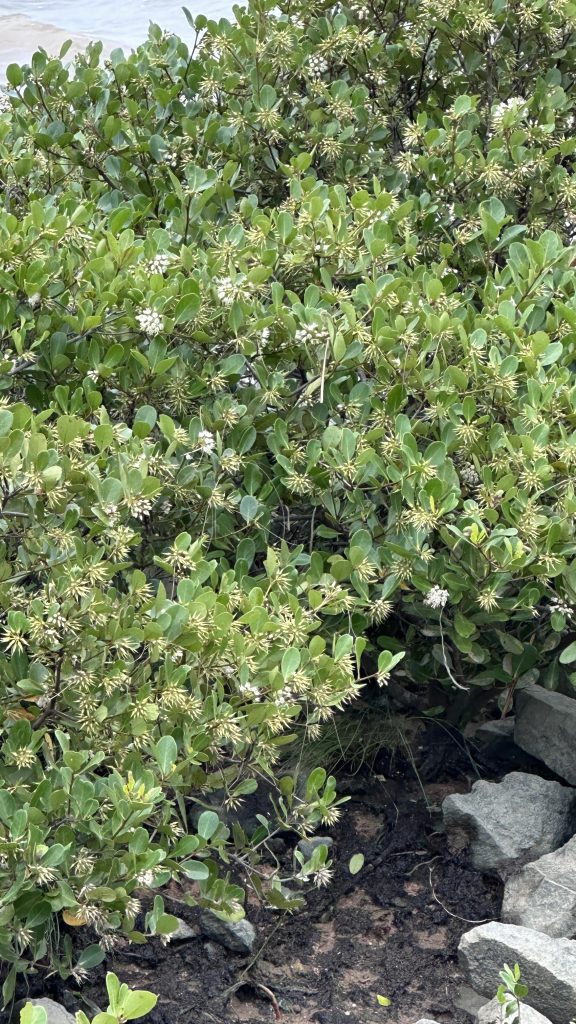
Aegiceras corniculatum (L.) Blanco
It is a shrub or small tree of the primens, the family of purple golden cattle, and the genus Candle fruit, 1.5-4 metres high; the twigs are hairless, brown and black. The leaves are alternate, almost opposite at the top of the branches, the leaves are leathery, obovate, oval or broadly obovate, the top is round or slightly concave, and the base is wedge-shaped. The umbrella-shaped inflorescence, grows at the top of the branch, has no stalk, and has more than 10 flowers; the peduncle is about 1 cm long, with some glandular dots. The fruit is cylindrical, curved like a crescent, and the top is gradually pointed; the calyx tightly wraps around the base. The flowering period is from December to January and February of the following year, and the fruiting period is from October to December. Sometimes the flowering period is in April and the fruiting period is in February.
It is distributed in China, India, the Indochinese Peninsula to the Philippines and southern Australia; in China, it is found in Guangxi, Guangdong, Fujian and the islands of the South China Sea. It grows on the muddy beaches where the tide rises and falls by the seaside, and is one of the tree species of mangroves. Sometimes it forms pure forests.
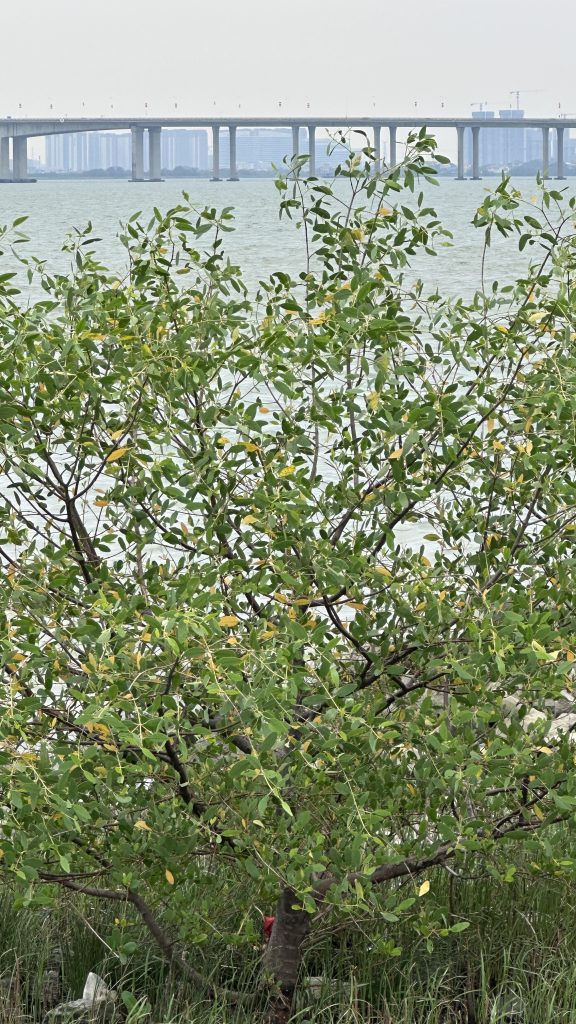
Sonneratia apetala Buch.-Ham.
It is a tree of the genus mulberry family, up to 20 metres high. The trunk is cylindrical, with bamboo shoot-shaped breathing roots protruding from the water; the stem is gray, the twigs are slender and drooping, with raised joints. The leaves are opposite, thick leathery, oval to long oval, and the petiole is light green to pink. Total inflorescence, ovate bud, triangular calyx, green. The flowers are white. The berries are spherical, and the seeds are “V”-shaped. The mulberry in Guangdong, China, blooms in May and June, and ripens from October to November.
The petalless mulberry is a species of mangrove plant, which is an excellent pioneer afforestation tree species in the intertidal mudflat. It plays a role in maintaining the ecological balance of the coastal zone.
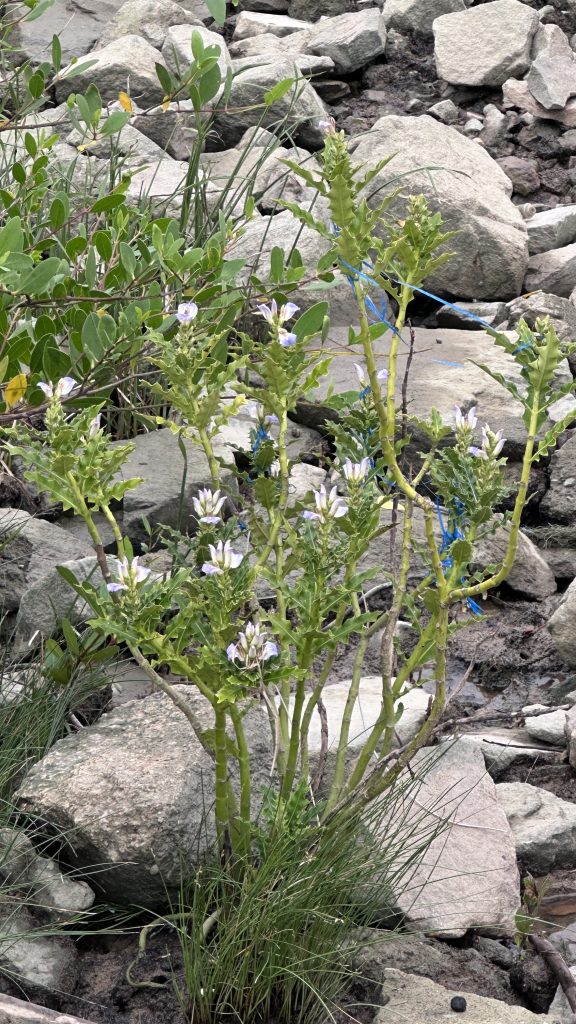
Acanthus ilicifolius L.
Acanthus ilicifolius L. belongs to the genus Acanthaceae. It belongs to the autumn tomato family in the mangrove plant family. It is a shrub growing in the lower layer of mangroves, 0.5m-1.5m high; the leaves are cross-dual, with sharp thorns at the endof the leaf; the inflorescence is spike-shaped, and the flowers are white and purple. It only has half of the petals. The stamens are completely exposed to the outside, which looks so ostentatious. The flowering period is between April and June; the fruit is fleshy, and there are 1 to 4 hidden foetal seeds in it.
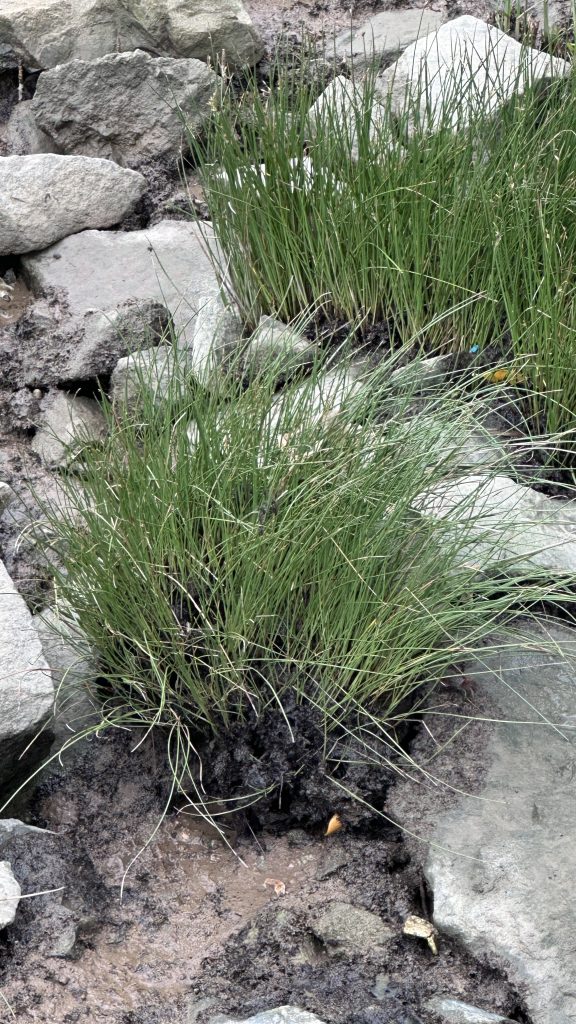
Juncus roemerianus
(commonly called rushes) are often found near mangrove forests due to their adaptability to similar environmental conditions.
Juncus species grow near mangroves because they exploit similar—but slightly milder—conditions, filling an ecological niche that benefits both the plant and the broader coastal ecosystem.
1. Salt Tolerance
– Some Juncus species (e.g., Juncus maritimus, Juncus roemerianus) can tolerate brackish or slightly saline soils, allowing them to thrive in mangrove-fringe zones where saltwater influence is present but less intense than in the core mangrove area.
2. Wetland Adaptation
– Rushes are helophytes (wetland plants) with adaptations like **aerenchyma** (air-filled tissues in roots) that enable survival in waterlogged, oxygen-poor soils—similar to mangrove environments.
3. Soil and Nutrient Benefits
– Mangrove sediments are rich in organic matter (from leaf litter and detritus), which Juncus can utilize.
– They often grow in slightly elevated areas or where freshwater seepage reduces salinity, avoiding direct competition with mangroves.
4. Ecological Niche Partitioning
– While mangroves dominate the low intertidal zone, rushes occupy the high marsh or upper intertidal, reducing competition for space and light.
5. Ecosystem Support
– Stabilizing sediments: Their dense root systems help prevent erosion along mangrove edges.
– Wildlife habitat: They provide shelter for crabs, insects, and small fish, enhancing biodiversity.
Misconceptions
– Not all rushes grow near mangroves—only salt-tolerant species do.
– They are not true mangrove associates but rather marsh plants that coexist in transitional zones.